Help people
see the value.
Explain the problem you solve, the idea behind it and the people making it happen.
From a first impression to a fuller picture.Build credibilitySTORYTELLING · MEDIA PUBLISHING
Business stories, thoughtfully written. Media publishing, clearly planned. Coverage, ready to share.



 DIGITAL JOURNAL
Reference destinations. Your proposal names the exact outlets, domains and publishing formats.
Before the meeting.
Before the pitch.
People look you up.
Give them a clear story about who you are and what you’re building. Then give your team the links and assets to carry that story into the next conversation.
The thinking behind the work ↗Explain the problem you solve, the idea behind it and the people making it happen.
From a first impression to a fuller picture.Build credibilityPublish through an agreed media route. Create a reference you can link to, share and return to.
A wider publishing footprint. A clear record.Explore distributionPut relevant coverage on your website, in a presentation or into a thoughtful follow-up.
Useful beyond the day of publication.See the reusable assetsoutlets in the advertised
flagship distribution scope
monthly publisher audience
context—not campaign views
typical advertised publishing
window, subject to the route
Scope and timing are based on the current TheMediaEffect offering. Final approval, publisher conditions and campaign requirements apply.
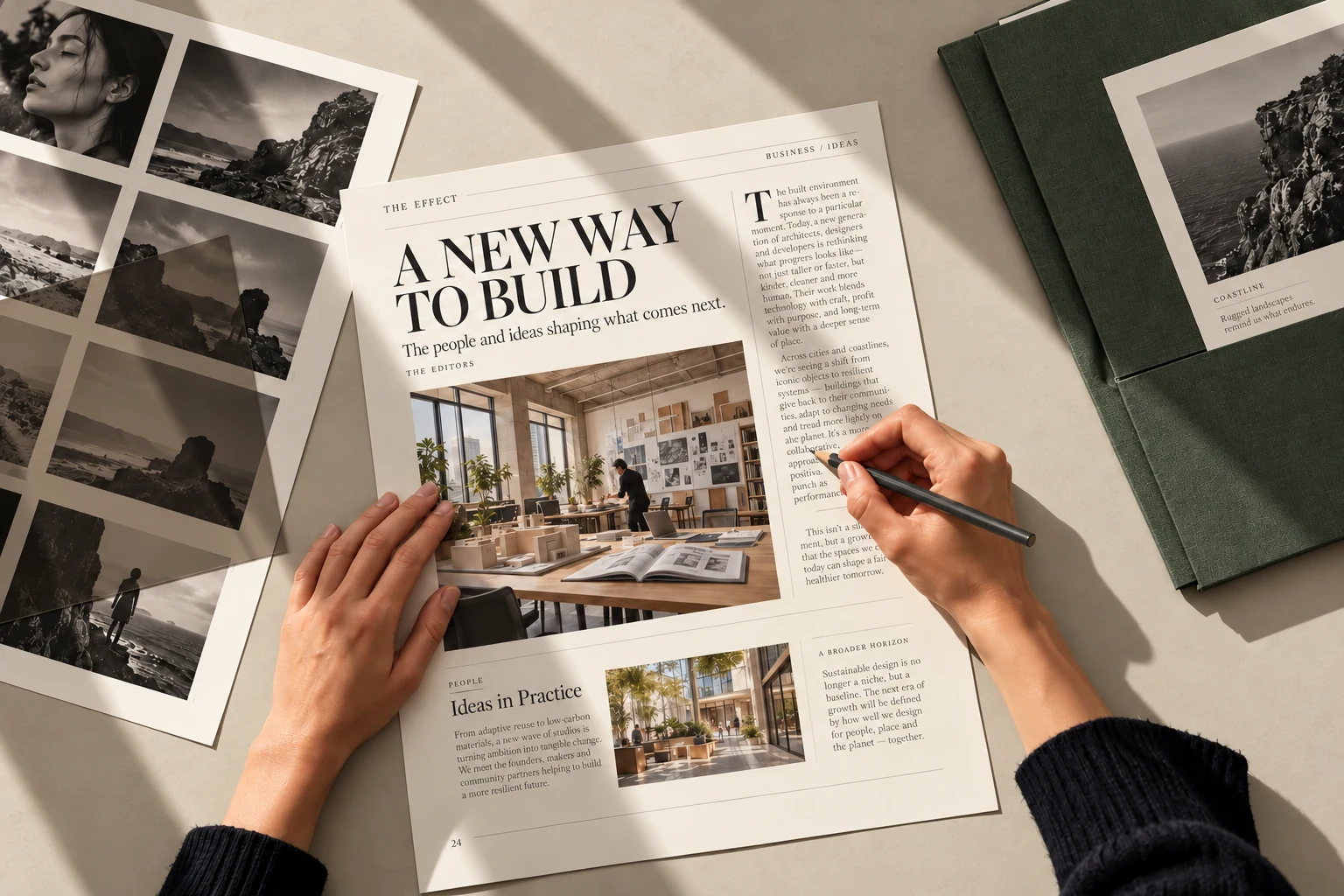
We find the angle in your announcement, then shape the facts and approved quotes into a story with a point.
Positioning · Article development · Final approvalExplore storytelling↗
Choose a publishing or distribution route around your brief. The destinations and formats are agreed before submission.
Publishing plan · Approved copy · Placement coordinationExplore media publishing↗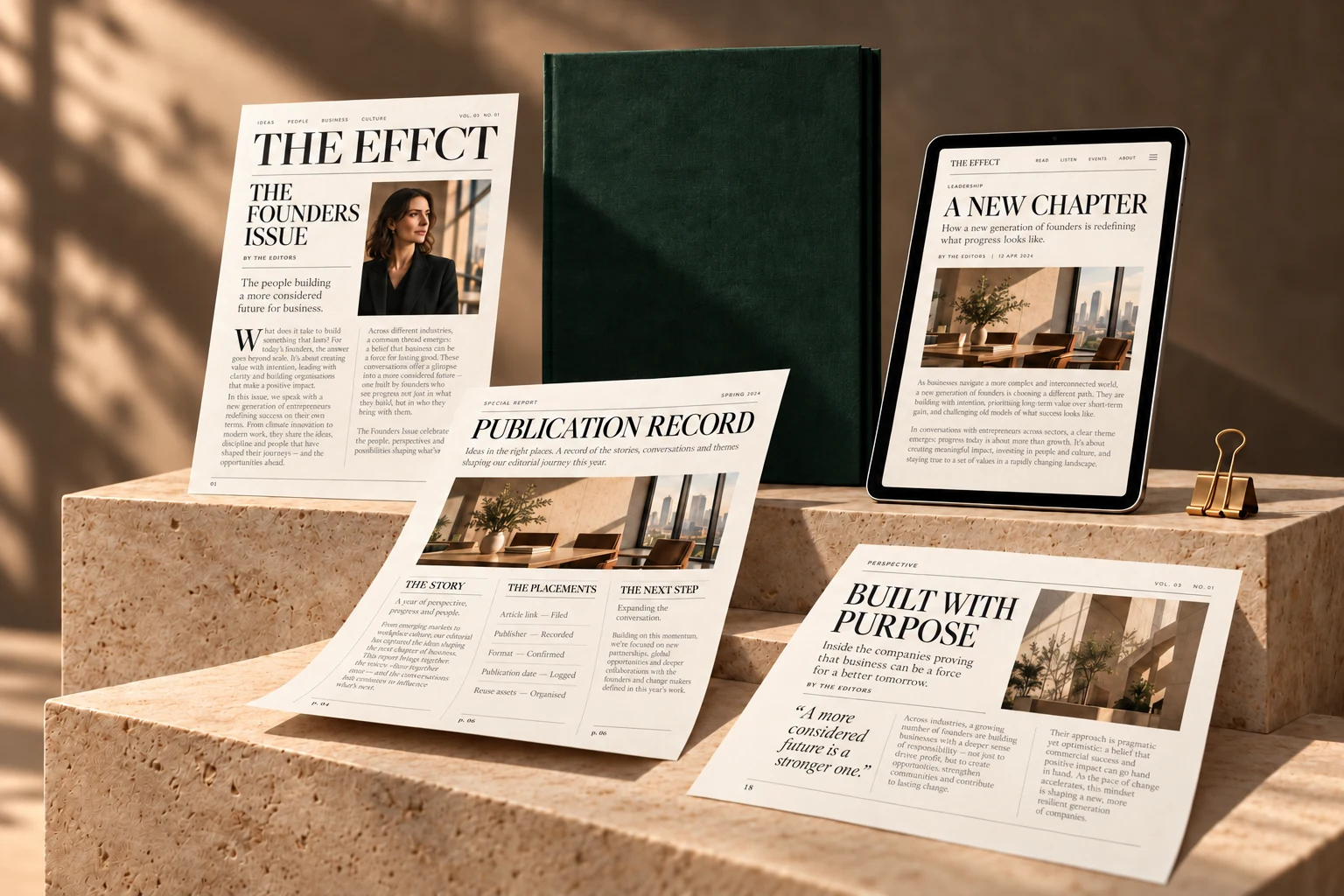
Open the article links, see how each piece appeared and keep the campaign files in one place.
Actual URLs · Publishing context · Organised reportingExplore the proof system↗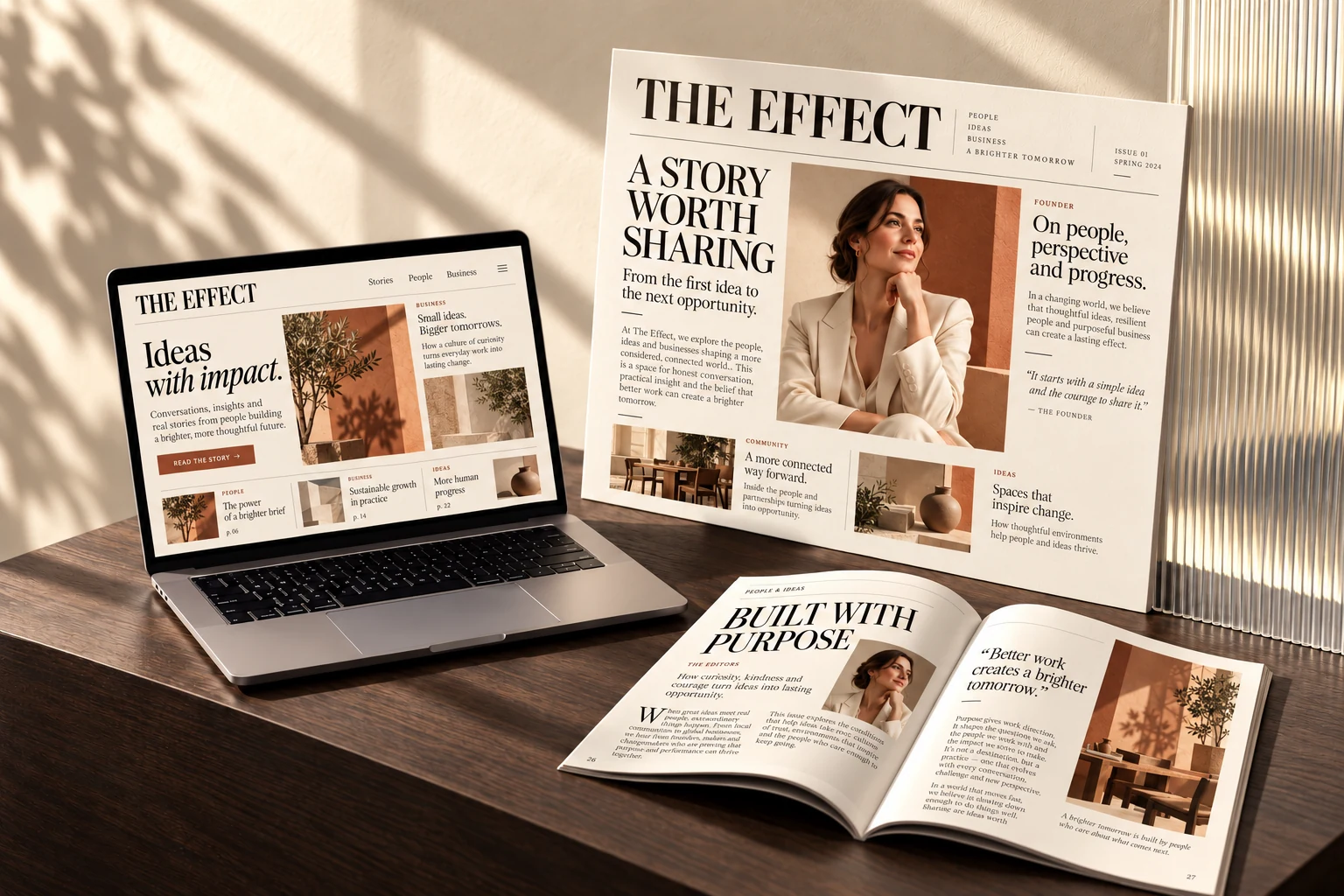
Turn coverage into a website section, a presentation slide or material for your next follow-up.
Website assets · Presentations · Relevant follow-upExplore reusable assets↗
The problem you noticed. The idea you couldn’t leave alone. The progress you’re making. Let’s help people understand the business behind the name.
Find your editorial angleA founder introduction, a launch or a client campaign. Explore three campaign directions.

01 / PEOPLE & PERSPECTIVE
Tell people what led you here. Connect your experience, your decisions and the problem your business exists to solve.
02 / NEWS & MOMENTUM
Make the news clear. What’s new, who it helps and why now—all in a story people can follow.

03 / PARTNERSHIP & DELIVERY
Add the media work your client needs. Start with one brief and finish with reporting and assets ready for your team to present.
Publication is a beginning. Your report brings the article links together. Your commissioned assets make the story ready for your next conversation.
Open the published articles from one organised record.
See the publication, format and details behind each link.
Use the website, presentation and follow-up assets in your agreed scope.
COMPANY NEWS / THE APPROVED ANGLE

What has changed. Who it helps.
Why this moment matters.
THE WORK, TOGETHER
A clear account of what was published.
Ready for the people who will use it.
IN THE CONVERSATION
A relevant article.
A source people can open.
A concise introduction.
With a published reference.
Useful context.
Ready for the next conversation.
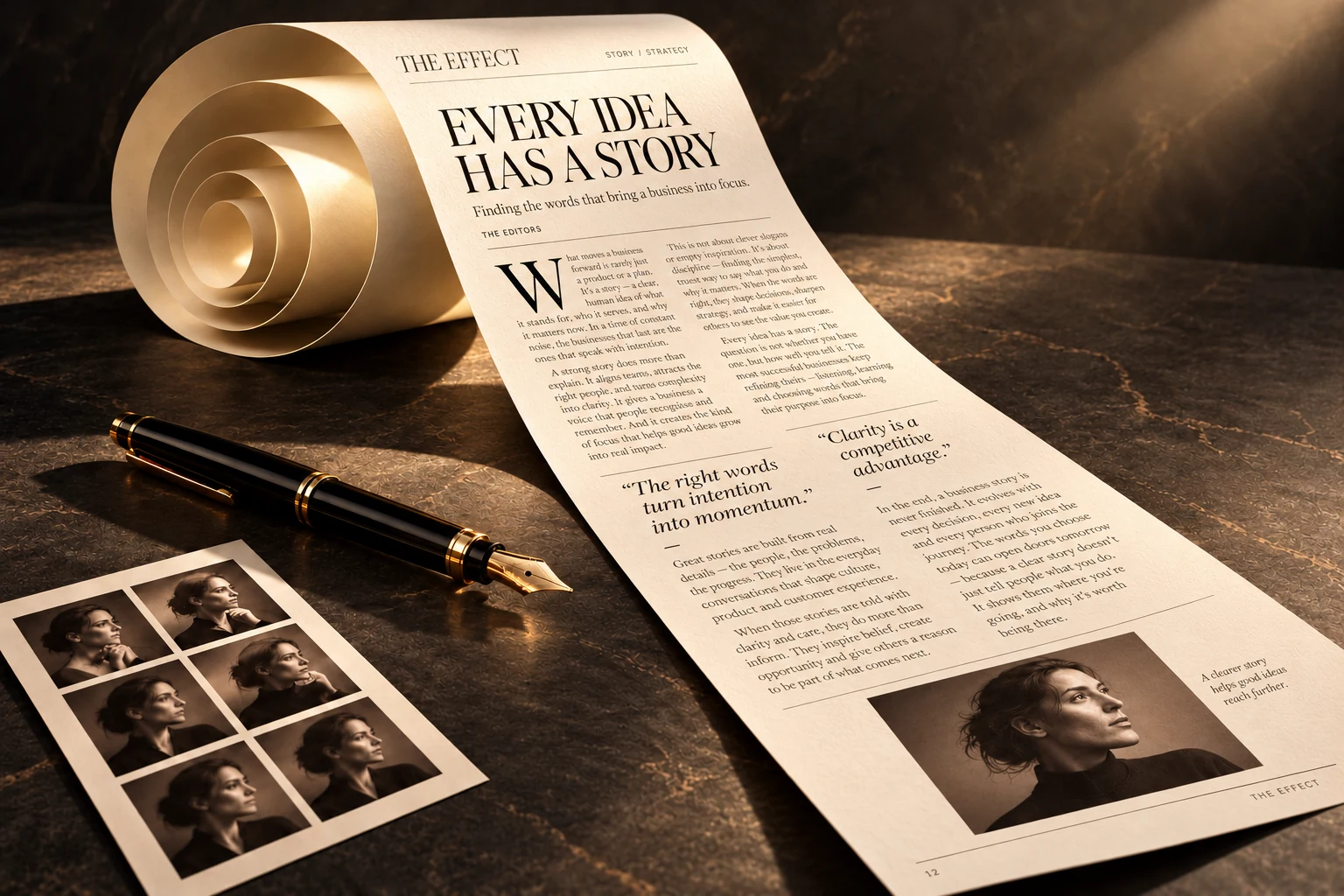
We turn your news and approved facts into an article with a clear point. You review the words before they go anywhere.
An angle. A draft. Your approval.Your approved article goes to the outlets or distribution route in your proposal. The destination and format are agreed upfront.
A defined publishing route.Get the article links, publication details and campaign files in one organised record.
The publication record.A website section. A pitch slide. A follow-up worth opening. Put the coverage where it adds something to the conversation.
The assets agreed in your scope.A focused placement, with coverage assets for your website.
For a company story ready to be published.
Recurring coverage and assets that keep pace with your business.
For teams with more news to share, more often.
A broader publishing plan, connected across your brand’s channels.
For brands ready for a wider, coordinated media programme.
Prices in USD. Your proposal confirms outlets, quantities, assets, timing, taxes and engagement terms. Enquiring does not start a purchase or subscription.
The coverage agreed in your proposal, the live article links and a campaign report. Your proposal also lists any website, presentation or sales assets we’ll prepare.
The advertised publishing window is typically 24–48 hours. Writing, approval and publisher requirements can add time. We confirm your campaign’s schedule in the proposal.
It depends on the route. Sponsored articles, syndicated releases and independently reported stories are different. Your proposal identifies the format. Independent editorial decisions belong to the newsroom.
No. Coverage gives people a published source to read and your team material to share. Rankings, AI citations, readership, leads and sales are not guaranteed.
Tell us what you’re building and who you want to reach. We’ll recommend a publishing plan, explain the deliverables and put the details in writing.
Get a proposal